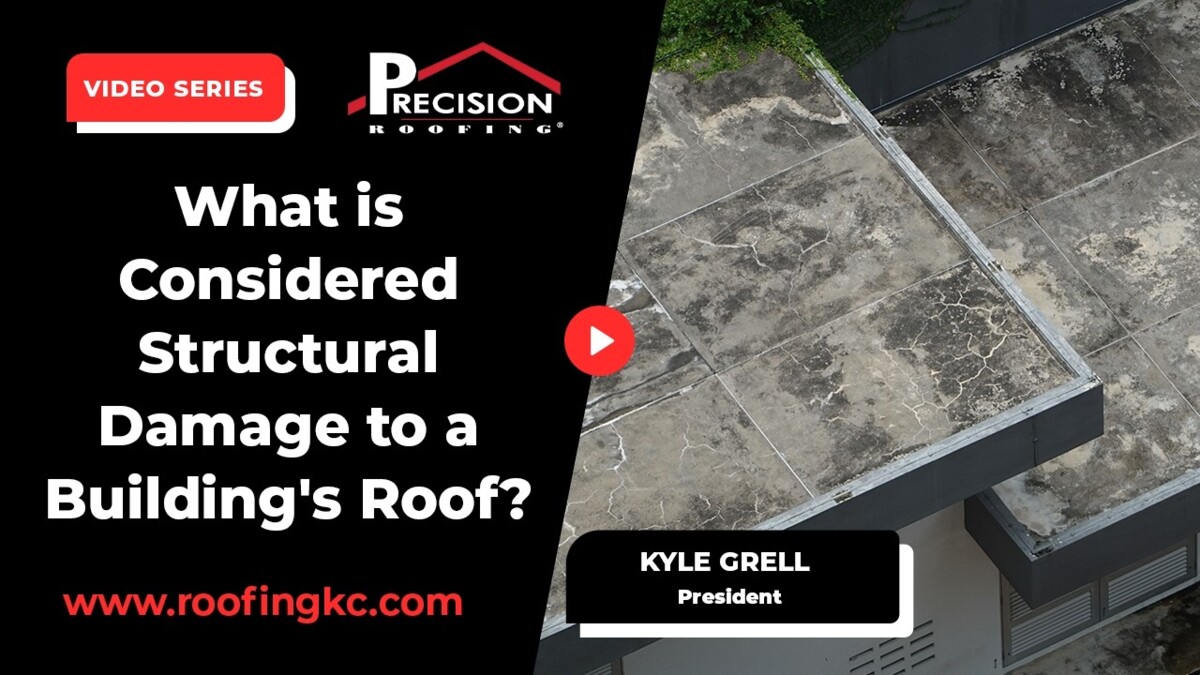
A single loose brick or a cracked truss can turn a routine roof repair into a full rebuild. We inspect commercial roofs across Kansas City, and knowing whether damage is structural or just routine determines the scope, timeline, and cost of the repair.
Understanding Roof Structural Damage on Commercial Buildings
Structural damage refers to anything that supports the roofing system. When that support is compromised, everything above it is affected too. On a commercial building, this generally includes:
- Roof trusses and joists
- Masonry and block walls tied to the roofline
Roof Trusses and Joists
Trusses and joists are what the roofing system depends on for support. When damage reaches this level, the fix isn’t a patch; it’s craning out and replacing the trusses themselves. That’s the point where a repair becomes a structural repair.
Masonry and Block Walls
Block and masonry walls that support the roofline fall under the same category. The test is straightforward: if the bricks have loosened enough to pick up by hand, one by one, there’s nothing holding the wall together anymore, and that’s structural damage.
What Doesn’t Count as Structural Damage
Not every issue on a commercial roof reaches this level. In most cases, the following are not considered structural:
- Holes or slices in the roofing membrane
- Wet insulation caused by a leak
- Rotted wood decking, if caught early
- Rusted metal decking, if caught early
Membrane Holes and Wet Insulation
Holes and slices in the roofing membrane are common, but they’re not structural on their own. Wet insulation from that same leak also falls outside this category.
Rotted Wood and Rusted Metal Decking
Wood decking that has rotted, or a metal deck that has rusted through, can sound serious. As long as the leak hasn’t gone on long enough for the damage to reach that point, these components can typically be replaced without it being a structural repair.
Key Takeaway: If the fix stops at the deck, insulation, or membrane and never reaches the trusses, joists, or masonry walls, it’s generally a repair, not a structural issue.
Need expert help with your roof? Contact Precision Roofing for a free consultation.
Why the Distinction Matters for Your Repair
A structural repair and a non-structural repair are rarely the same scope of project. Treating a structural issue like a routine repair can leave the underlying problem in place, and treating a routine repair like a structural emergency can mean paying for work you don’t actually need. The only way to tell which one you’re dealing with is to look at what the damage has actually reached, not how bad it looks from a distance. Before you assume the worst, or dismiss a real issue, work through these in order:
- Check whether the damage reaches the trusses, joists, or masonry walls.
- Get a professional inspection rather than guessing from the ground.
- Compare the scope and cost of a structural fix against a standard repair.
An Accurate Assessment Protects Your Budget
A proper inspection before work begins can help you avoid overpaying for repairs you don’t need, or underestimating the ones you do need. We recommend a documented assessment before any contract is signed.
Structural Repairs Involve More Equipment and Labor
Craning out damaged trusses or rebuilding a section of masonry wall generally takes more time, more equipment, and more labor than replacing decking or patching a membrane. That difference is usually what drives up the final invoice, which is why it’s worth confirming which category the damage falls into up front.
If you suspect your building has structural damage, don’t wait for a small problem to grow. Contact Precision Roofing today to schedule an inspection and get a clear answer about your roof’s condition.